Why resident perks outperform rent discounts in multifamily
Discover why resident perks drive higher renewals and protect revenue better than rent discounts. Learn how loyalty platforms improve retention, engagement, and portfolio performance in multifamily housing.
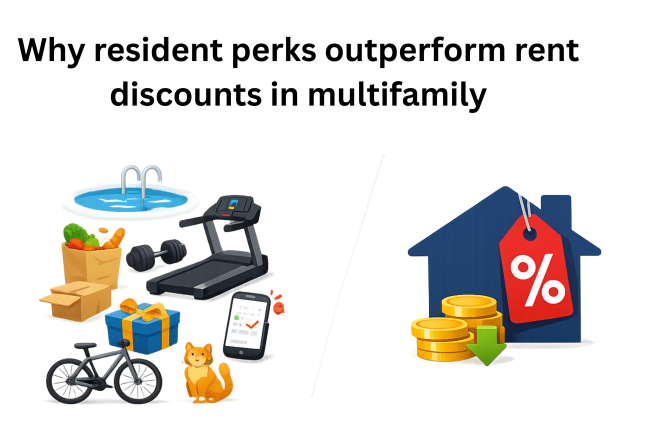
In multifamily housing, rent discounts often feel like the quickest fix for vacancy pressure. Lower the price, attract attention, and fill units.


But seasoned operators in residential real estate know this approach comes with hidden trade-offs. Price cuts reduce revenue instantly and reshape resident expectations in ways that are difficult to reverse.
There’s a smarter path. Many forward-thinking portfolios are shifting toward structured resident benefits powered by a Loyalty Management Platform instead of relying on recurring concessions.
If you’re evaluating retention strategy, this guide provides deeper context on building programs that actually move renewal rates.
The hidden downside of rent discounts
Discounts look tactical. In reality, they influence long-term asset performance.
When rent is reduced:
-
Revenue drops immediately
-
Future pricing flexibility shrinks
-
Renewal conversations become harder
-
Brand positioning weakens
Even temporary concessions often create lasting price anchors in the resident’s mind.
More importantly, discounts do not improve the quality of life. They simply reduce the bill.
That difference matters.
Why resident perks protect revenue
Resident perks increase perceived value without reducing base rent.
Instead of lowering the price, you elevate the overall experience. That shift changes the conversation from “How cheap is this?” to “What do I get here that I don’t get elsewhere?”
Common examples include
-
Exclusive savings marketplaces
-
Streaming or lifestyle partnerships
-
Rewards for on-time payments
-
Incentives for switching to autopay
-
Digital engagement bonuses
-
Renewal recognition benefits
When delivered through a Loyalty Management Platform, these benefits become automated, measurable, and scalable across properties.
The rent stays intact. The experience improves.
Experience now drives renewal decisions.
Amenities are used to differentiate properties. Today, they’re baseline.
Most communities offer fitness centers, shared spaces, and similar layouts. What residents increasingly notice is how the property interacts with them after move-in.
They value:
-
Easy digital payments
-
Recognition for loyalty
-
Everyday savings
-
Seamless communication
-
A sense of ongoing value
A centralized Loyalty Management Platform connects these touchpoints into a structured engagement strategy.
Discounts attract attention at move-in. Perks build relationships throughout the lease.
Behavioral impact: why perks create stickiness
Discounts are transactional. They influence the initial decision.
Perks are behavioral. They reinforce engagement over time.
When residents receive consistent rewards for actions such as
-
Paying rent on time
-
Enrolling in automatic payments
-
Renewing leases
-
Participating in community programs
They associate positive experiences with the property.
That reinforcement increases the likelihood of:
-
On-time payments
-
Renewal conversations that close faster
-
Higher overall satisfaction
-
Reduced churn
This is especially relevant for enterprise-level residential real estate portfolios seeking predictable retention.
Operational scalability without added burden
On-site teams are already stretched.
Leasing tours, maintenance coordination, vendor management, and resident communication fill most days. Adding manual incentive tracking creates friction.
A properly structured Loyalty Management Platform automates:
-
Reward triggers
-
Eligibility tracking
-
Portfolio-wide standardization
-
Engagement reporting
This removes operational strain while giving leadership clear visibility into performance.
Discounts offer no behavioral insight. They simply reduce rent and hope occupancy improves.
Protecting brand positioning across markets
Large multifamily operators often manage assets across regions.
When rent discounts vary property by property, brand perception becomes inconsistent. Prospects begin to view pricing as negotiable rather than strategic.
Resident perks allow operators to maintain consistent value positioning.
Instead of competing solely on price, properties compete on experience.
That shift strengthens portfolio-level brand equity in competitive residential real estate markets.
Lifetime value improves without eroding rent
Retention improvements compound over time.
When residents renew, portfolios benefit from
-
Reduced vacancy exposure
-
Lower turnover costs
-
Stable occupancy
-
Predictable revenue streams
A Loyalty Management Platform supports this by reinforcing behaviors that drive renewal.
The key distinction is this: perks protect the integrity of rent while increasing engagement. Discounts undermine pricing power.
Over time, pricing power matters more.
Data-driven visibility for enterprise teams
Modern multifamily leadership expects measurable performance.
With a structured platform, operators gain insight into:
-
Engagement trends
-
Reward redemption behavior
-
Renewal correlation
-
Payment consistency
This data informs asset-level and portfolio-level strategy.
Discounting does not provide this visibility. It is a blunt instrument.
Perks, when centralized through a Loyalty Management Platform, provide actionable insight that leadership teams can evaluate and refine.
Aligning with modern renter expectations
Today’s renters are accustomed to subscription ecosystems and loyalty programs in other industries.
They expect:
-
Ongoing benefits
-
Personalized experiences
-
Digital-first engagement
-
Recognition for loyalty
Resident perks feel aligned with that mindset.
Discounts feel reactive.
Communities that integrate structured loyalty strategies position themselves as forward-thinking rather than transactional.
Managing risk in uncertain markets
In softer leasing cycles, concessions often expand quickly.
However, sustained discounting compresses margins and limits flexibility. Once expectations are lowered, increasing rent becomes more difficult.
Perks offer adjustable cost structures and strategic flexibility. Many benefits are usage-driven or partnership-supported, allowing operators to scale programs without permanently reducing rent.
A centralized Loyalty Management Platform gives enterprises control over engagement investments while preserving revenue integrity.
Moving from price competition to value leadership
When two properties compete only on rent, the lowest price often wins.
When one property offers:
-
Exclusive resident savings
-
Recognition for positive behavior
-
Ongoing engagement benefits
-
Seamless digital experiences
The conversation changes.
Prospects compare overall value rather than base rent alone.
That repositioning protects long-term portfolio strength in residential real estate.
The strategic takeaway for multifamily operators
Rent discounts may solve short-term vacancy pressure.
Resident perks solve long-term retention challenges.
A well-implemented Loyalty Management Platform enables enterprises to:
-
Protect face rent
-
Improve renewal outcomes
-
Increase resident engagement
-
Maintain consistent brand positioning
-
Gain measurable performance insights
In competitive residential real estate environments, protecting revenue while improving experience is the smarter play.
What's Your Reaction?